
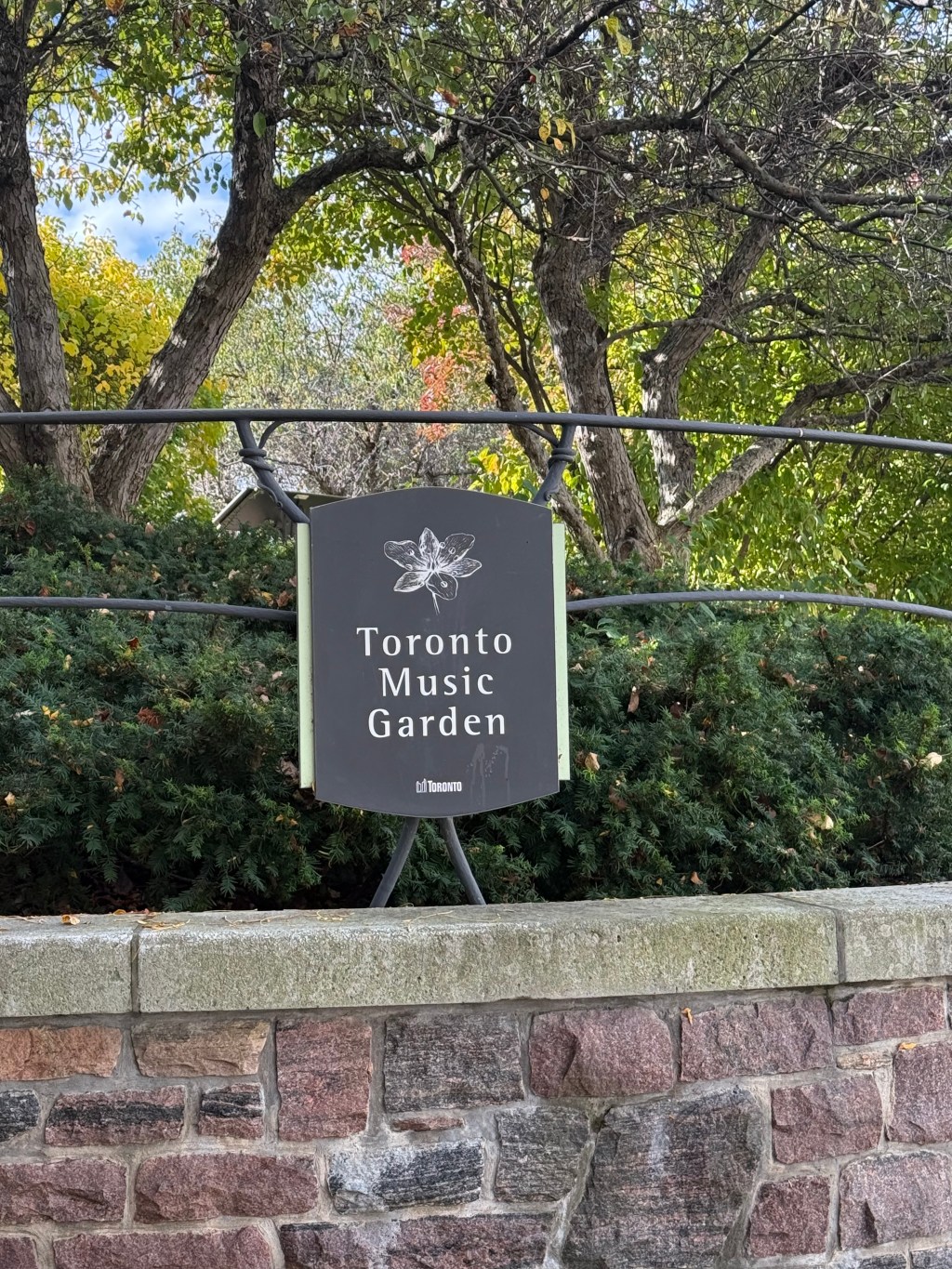
The Toronto Music Garden offers a compelling case study in the interdisciplinary translation of musical structure into spatial design, drawing directly upon Johann Sebastian Bach’s Unaccompanied Cello Suite No. 1 as its conceptual foundation. Conceived as a landscape analogue to the suite’s sequence of dance movements, the garden renders musical form tangible through spatial organization, material choice, and kinetic flow. In doing so, it invites a mode of musical engagement that extends beyond auditory perception, allowing Bach’s compositional logic to be experienced through movement, sight, and embodied interaction.
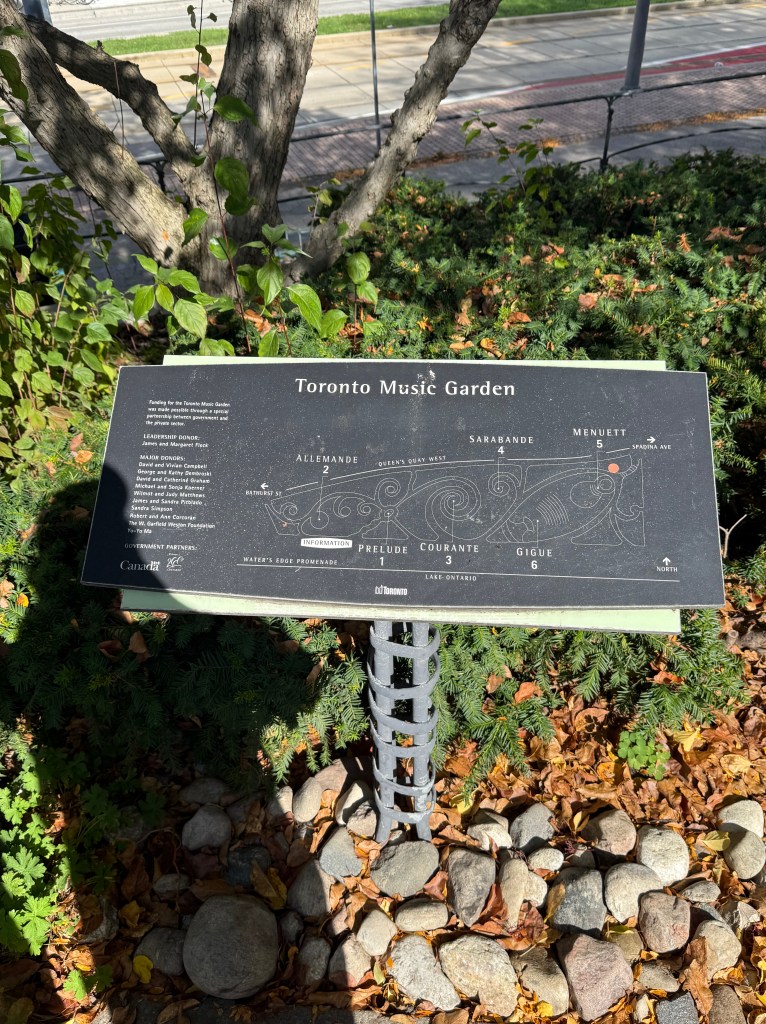
The Prelude, which functions in the suite as both an introduction and a continuous unfolding of harmonic motion, is translated into a fluid, river-like landscape defined by winding pathways and gentle curves. This design mirrors the Prelude’s uninterrupted stream of sixteenth-note figures, which generate a sense of perpetual forward momentum despite the absence of a fixed melodic refrain. Granite boulders embedded throughout the space evoke the stabilizing presence of a riverbed, providing structural grounding analogous to the harmonic framework that underlies the music’s surface-level improvisatory character. The strategic placement of trees further establishes visual balance and proportional symmetry, reflecting the underlying tonal equilibrium that governs the movement’s expansive phrasing.
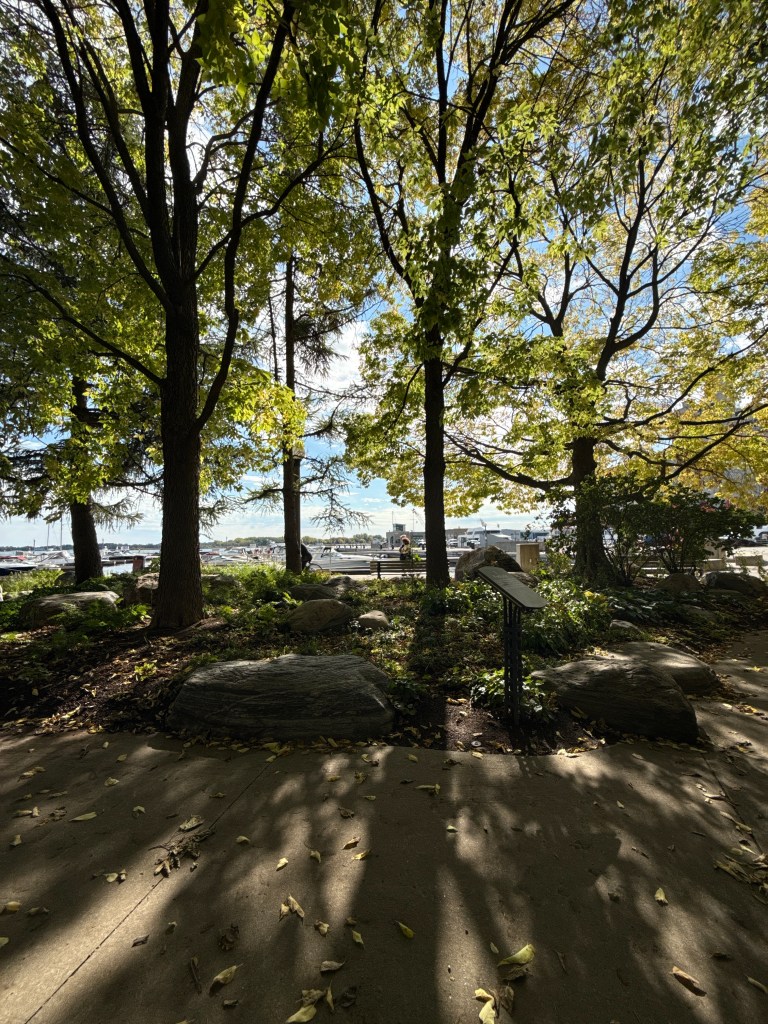
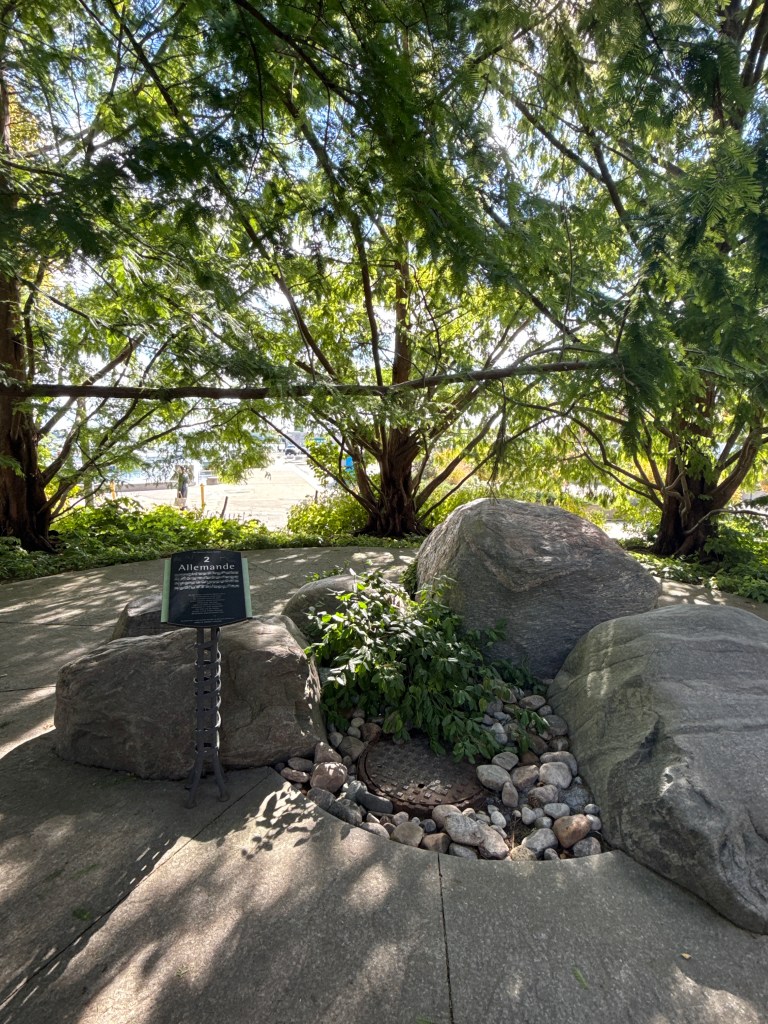
The Allemande, derived from an early German dance tradition, is interpreted through a tranquil birch forest that emphasizes contrast and introspection. Musically, the Allemande is characterized by its moderate tempo, steady rhythmic pulse, and expressive shifts in register and dynamics. These qualities are spatially represented through stones of varying heights distributed throughout the area, culminating in a prominent central stone that serves as a perceptual focal point. From this elevated position, visitors encounter an expansive view of the harbor framed by redwood trees, an experience that parallels the movement’s alternation between grounded rhythmic stability and moments of melodic breadth and expressive expansion.
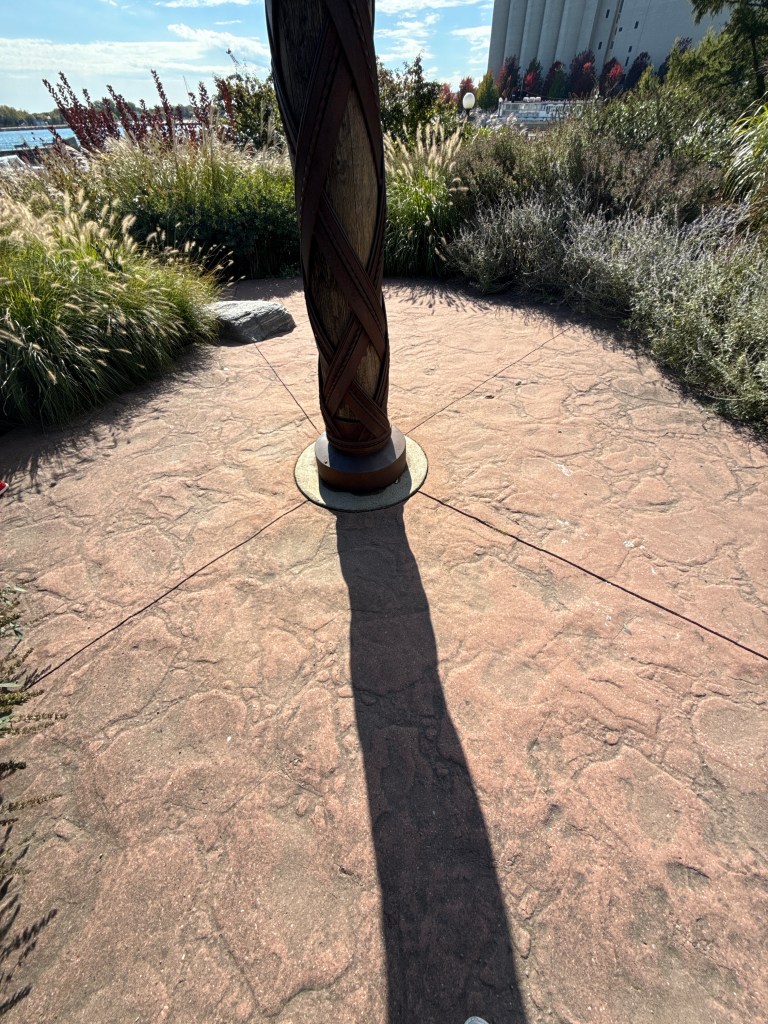
The Courante, informed by lively French and Italian dance forms, is rendered through wildflowers arranged at varying elevations, visually articulating the movement’s characteristic intervallic leaps—often spanning an octave or more. The rising and falling plant levels reflect the music’s rhythmic propulsion and buoyant energy, while the inclusion of perennials and grasses that attract birds and small wildlife introduces an element of unpredictability akin to the Courante’s rhythmic vitality. At the center of the space, a Maypole responds dynamically to wind, functioning as a kinetic symbol of the dance’s exuberant motion and reinforcing the inseparability of rhythm and physical movement.
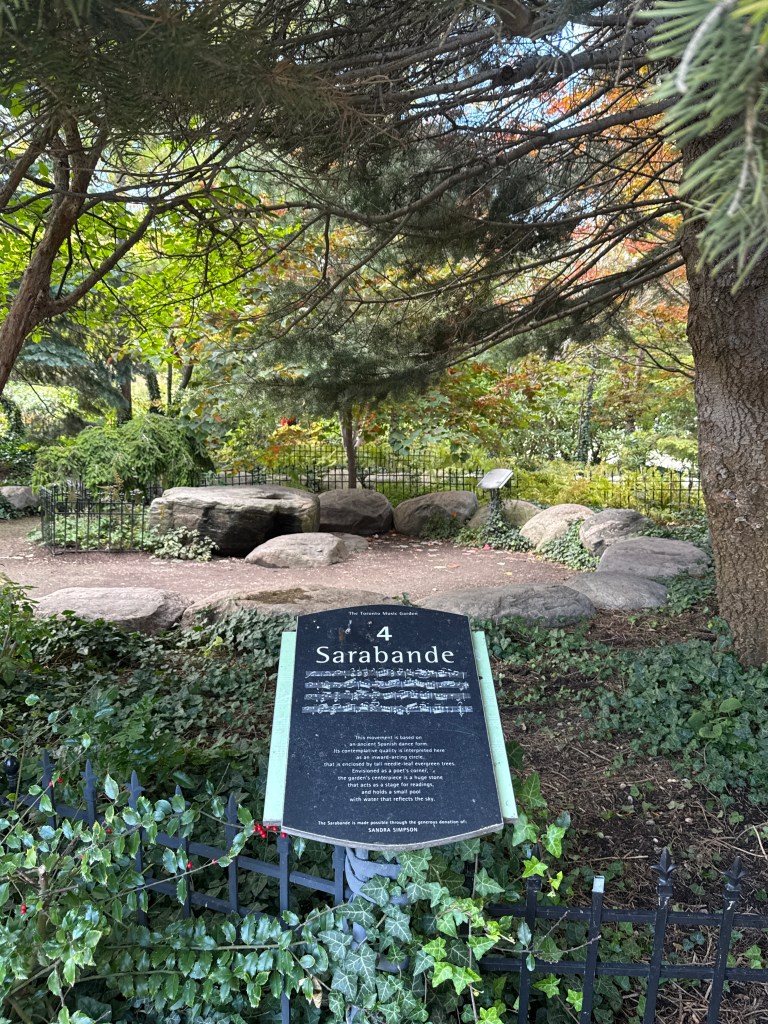
In contrast, the Sarabande—rooted in an ancient Spanish dance tradition—embodies a markedly introspective character. The garden translates this quality through an inward-curving circular grove of towering needle-leaf evergreens, creating a spatial enclosure that fosters stillness and contemplation. The grove’s graceful arcs parallel the elongated musical phrases that define the Sarabande, while the movement’s expressive harmonic language—particularly its use of borrowed tones and subtle chromatic inflection—is echoed in the space’s restrained yet evocative design. A central stone positioned beside a reflective pool serves as both a symbolic and functional focal point, reinforcing themes of introspection and temporal suspension that distinguish the Sarabande from the surrounding movements.
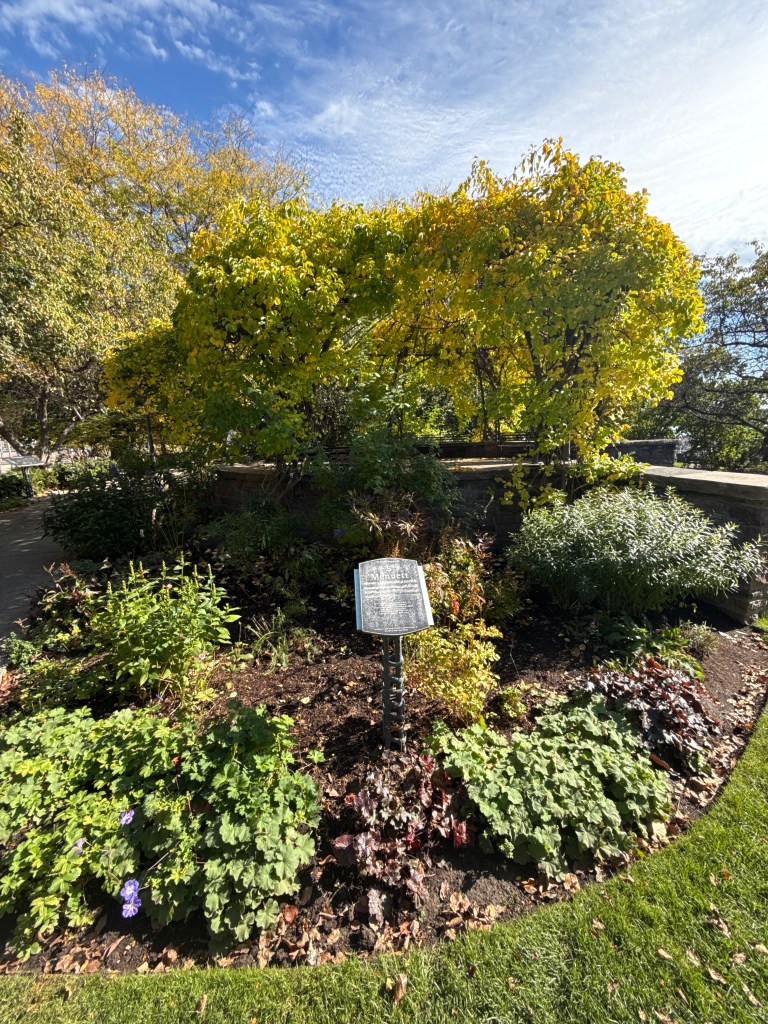
The Menuett, emblematic of French courtly dance culture during Bach’s lifetime, is represented by a ring of carefully arranged flowers encircling a circular pavilion. This configuration emphasizes symmetry, poise, and measured motion, qualities intrinsic to the minuet’s choreographic and musical structure. The circular layout reinforces the sense of continuity inherent in the dance form, while the pavilion’s modest scale recalls the intimate context of chamber music performance in aristocratic settings. The Menuett’s 3/4 time signature, with its cyclical pattern of accent and release, finds architectural resonance in the pavilion’s form and its relationship to the surrounding floral arrangement, underscoring the close correspondence between rhythmic organization and spatial design.
The suite’s concluding Gigue—also known as the English “jig”—is translated into a series of sweeping grass terraces arranged as a curved amphitheater. This design captures the movement’s exuberant tempo and rhythmic buoyancy, encouraging physical movement and communal engagement. The terraced levels rise and fall in rhythmic succession, visually echoing the energetic propulsion of the music. At the base of the terraces, a stone performance platform shaded by a weeping willow provides an informal gathering space, reinforcing the Gigue’s celebratory and communal ethos as the suite’s final movement.
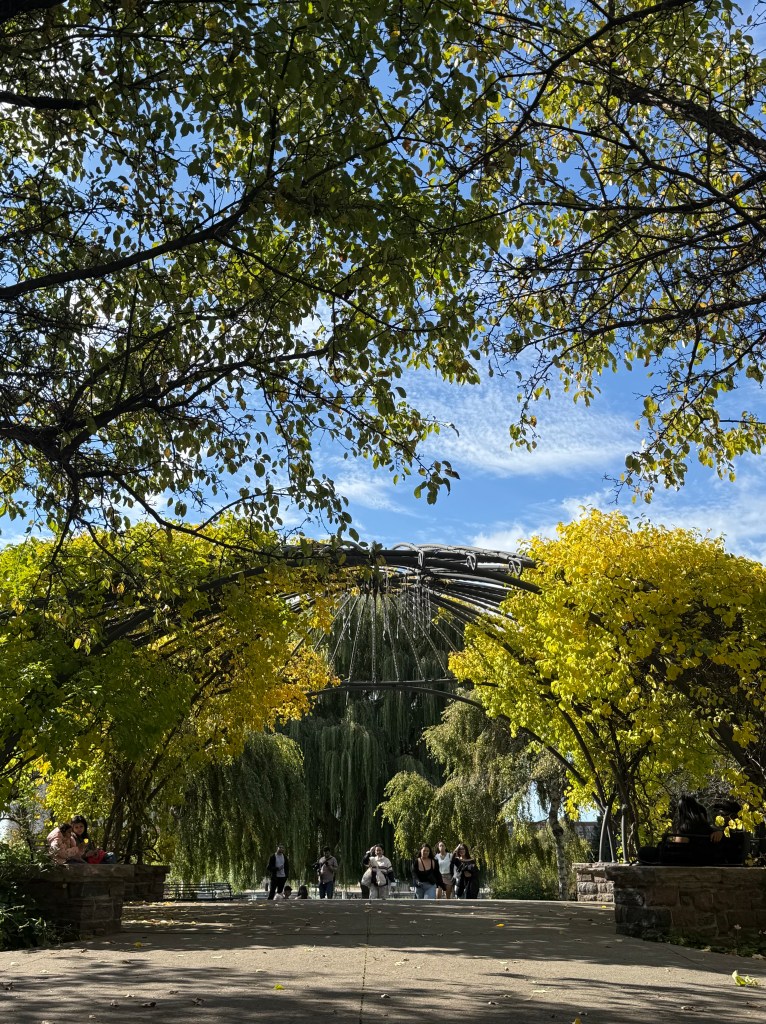
Taken as a whole, the Toronto Music Garden exemplifies the potential of landscape design to function as a form of embodied music analysis. By translating Bach’s Unaccompanied Cello Suite No. 1 into spatial, kinetic, and visual terms, the garden offers an alternative mode of engagement with musical form—one in which sound is reimagined as movement, and dance is inscribed upon the land. In this context, the garden does not merely illustrate Bach’s music; it extends its interpretive possibilities, inviting listeners and visitors alike to inhabit the structural and expressive dimensions of the suite in physical space.
 Rhejay Media LLC - Teaching, Arranging, Releasing
Leave a comment